


How In-House Wastewater & Chrome-Free Pretreatment Protect Architectural Aluminium Projects from Supply Delays & Coating Failures
 Oct 20, 2026|
 View:62
When sourcing custom architectural aluminium products, such as perforated screens, balustrades, security gates and fencing systems, procurement teams typically focus on specifications, pricing and delivery schedules. However, behind every powder-coated extrusion lies a critical industrial footprint that directly impacts your commercial risk: chemical surface pretreatment and wastewater stewardship.
Across key global markets like the European Union and Australia, environmental regulations and sustainable procurement standards are tightening rapidly. Whether you are navigating the EU's evolving ESG reporting frameworks and corporate sustainability due diligence, or aligning with Australia's Green Star ratings and NCC environmental mandates, your supply chain's industrial footprint is under active scrutiny.
Selecting a manufacturing partner who manages chemical processes responsibly is no longer just an ethical preference—it is a vital safeguard against project delays, non-compliance penalties, and reputational risk. If you require specific environmental management documentation or compliance records to support your local project submissions, our technical team is always available to provide them upon consultation.
1.From 9-Stage Precision Pretreatment to Effluent: Where Surface Quality Begins
Surface preparation is the single most critical foundation for architectural powder coating. If oils, extrusion residues, and natural surface oxides are not systematically eliminated, they compromise coating adhesion, degrade finish uniformity, and trigger premature corrosion in demanding coastal or urban environments.
To ensure your architectural aluminium components achieve consistent adhesion and lasting durability, Princeton Metal runs all extrusions and fabricated panels through a rigorously controlled nine-stage immersion pretreatment sequence:
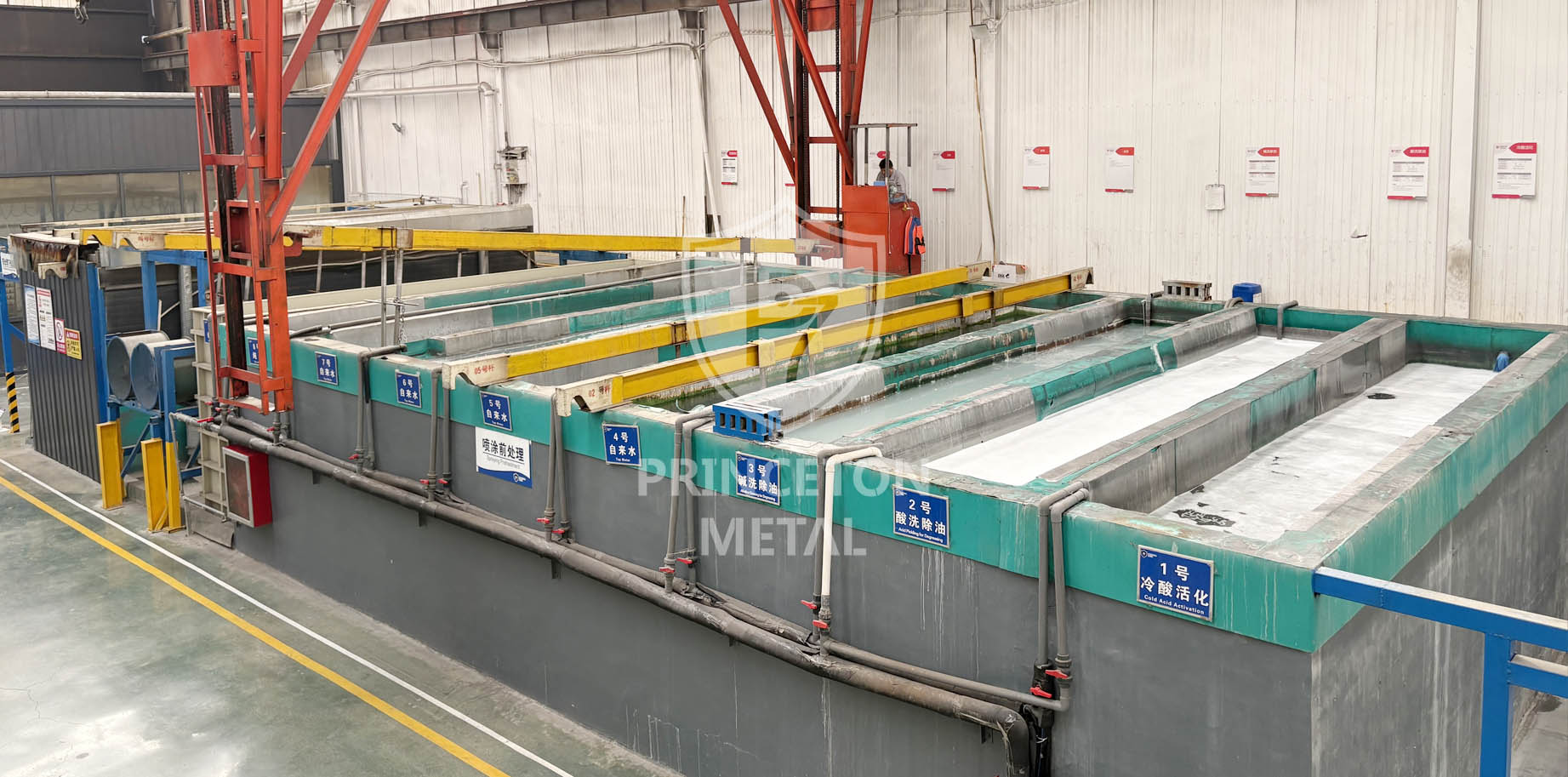
Princeton Metal's multi-stage immersion pretreatment line
| Stage | Process | Purpose |
| 1 | Cold Acid Activation | Activates the aluminium substrate to accept chemical processing |
| 2 | Acid Pickling & Degreas | Strips heavy surface contamination, oxide layers, and manufacturing residues |
| 3 | Alkaline Degreasing | Provides an additional cleaning stage to remove residual oils and contaminants |
| 4 | Tap Water Rinse 1 | Flushes active treatment chemicals from product surfaces |
| 5 | Tap Water Rinse 2 | Provides secondary rinsing to prevent chemical drag-out |
| 6 | Tap Water Rinse 3 | Progressively dilutes dissolved solids across rinse tanks |
| 7 | Tap Water Rinse 4 | Provides an additional rinsing stage before the final rinse |
| 8 | Demineralised Water (DI Water) Rinse | Removes mineral deposits and ionic contaminants prior to chemical passivation |
| 9 | Chrome-Free Passivation | Applies a conversion treatment to support the subsequent coating process |
Together, these steps help reduce chemical carryover and prepare the aluminium surface for the subsequent coating process. More importantly, Stage 9 uses advanced chrome-free chemistry rather than hazardous hexavalent chromium compounds, directly supporting your compliance with RoHS, REACH, and Australian environmental workplace standards.
Naturally, operating a comprehensive chemical line generates industrial process effluent that must be handled with equal rigor. Instead of relying on vulnerable external collection loops, all rinse waters and spent baths flow directly into our dedicated on-site treatment facility.
2.Inside Our In-House Wastewater Treatment Facility
Managing a chemical pretreatment line requires a wastewater treatment process that is just as carefully controlled. Princeton Metal operates an on-site physical-chemical wastewater treatment area. The area includes chemical dosing tanks, reaction and sedimentation tanks, and transfer pumps for the process water generated by the pretreatment line.
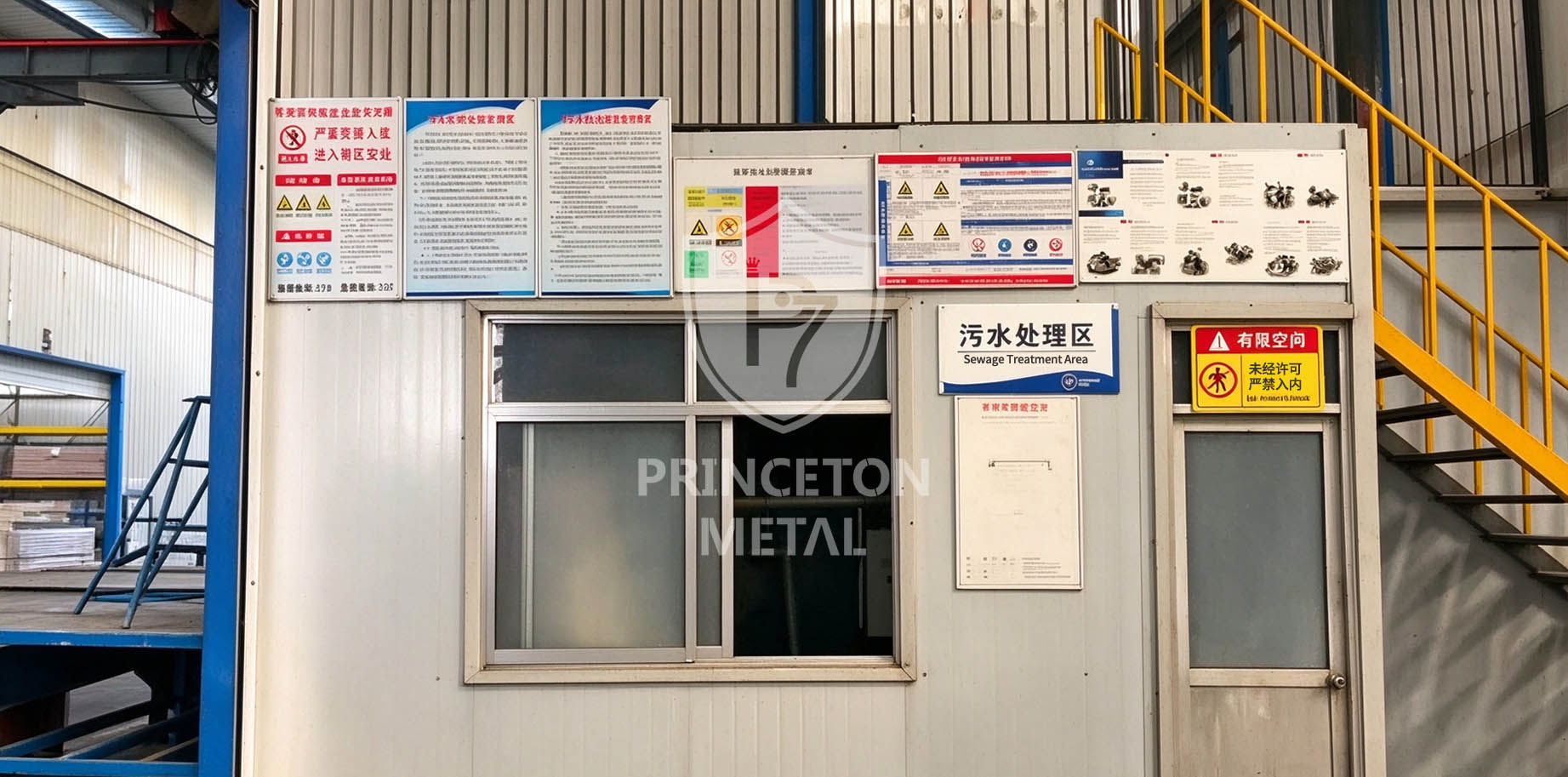
Princeton Metal — Wastewater Treatment Area
The treatment process involves pH adjustment, coagulation and flocculation, followed by sedimentation and sludge handling.
(1)pH Adjustment
Wastewater from the pretreatment process may have varying pH levels. Flake caustic soda is used to prepare an alkaline solution for pH adjustment, helping establish suitable conditions for subsequent treatment stages.
(2)Coagulation and Flocculation with PAC and PAM
To help remove suspended particles from the wastewater, the treatment process uses two chemicals with complementary functions:
Polyaluminium Chloride (PAC): Acts as a coagulant, helping destabilise fine suspended particles so they can aggregate.
Polyacrylamide (PAM): Acts as a flocculant, helping smaller aggregates form larger flocs that can be separated through sedimentation.
(3)Operational Control
After dosing, the wastewater enters reaction and sedimentation tanks. The settled sludge is collected and stored on site before being transferred for off-site handling.
Dosing pumps and mixers are controlled through a dedicated local control panel. Operating and safety procedures are posted at the treatment area.
Key takeaway: Wastewater treatment is integrated into the production process and managed with dedicated equipment.
3.What This Means for Your Aluminium Supply Chain
For your architectural projects, our integrated pretreatment and on-site effluent stewardship deliver measurable commercial advantages:
Production coordination: Managing pretreatment and wastewater handling on site reduces dependence on an external wastewater treatment arrangement.
Coating quality: Controlled surface preparation, together with checks on coating thickness, colour, gloss and adhesion, helps support consistent finished products.
Supplier assessment: Relevant environmental records, available permits and product quality documentation can help you evaluate manufacturing arrangements against your project requirements.
4.Frequently Asked Questions (FAQ)
Q1: Why is an in-house wastewater facility relevant when choosing an aluminium supplier?
An on-site wastewater treatment facility allows wastewater generated by pretreatment operations to be managed within the manufacturer's own production environment, reducing dependence on an external wastewater treatment arrangement.
Q2: Does your passivation process contain hexavalent chromium?
No. Our nine-stage pretreatment line uses a non-hazardous, chrome-free conversion coating instead of chromium-based passivation chemistry.
Q3: What quality and environmental documentation can you provide for my project tenders?
Depending on your project requirements, we can provide powder coating qualification reports, DGL color approval documentation, coating thickness inspection logs, cross-cut adhesion test sheets, and relevant environmental compliance records. If your project team requires specific documentation, please contact us for a consultation.
Q4: How do you verify coating quality and colour consistency before dispatch?
Every batch undergoes strict pre-dispatch quality verification, including digital dry film thickness (DFT) checks, mechanical cross-cut adhesion tests, and colour tolerance verifications against agreed master swatches. We can also provide dual-method verification (instrument spectrophotometer readings paired with physical DGL swatch comparisons) upon request.
5.Why Choose Princeton Metal for Architectural Aluminium Projects?
Shandong Princeton Metal Products Co., Ltd. designs and manufactures precision architectural aluminium systems for residential, commercial, and large-scale industrial projects worldwide. Our core capabilities include:
Custom laser-cut and perforated aluminium facade screens
Architectural balustrade, railing, and privacy screening systems
High-security pedestrian, sliding, and cantilever driveway gates
Modern louvre and modular fencing solutions
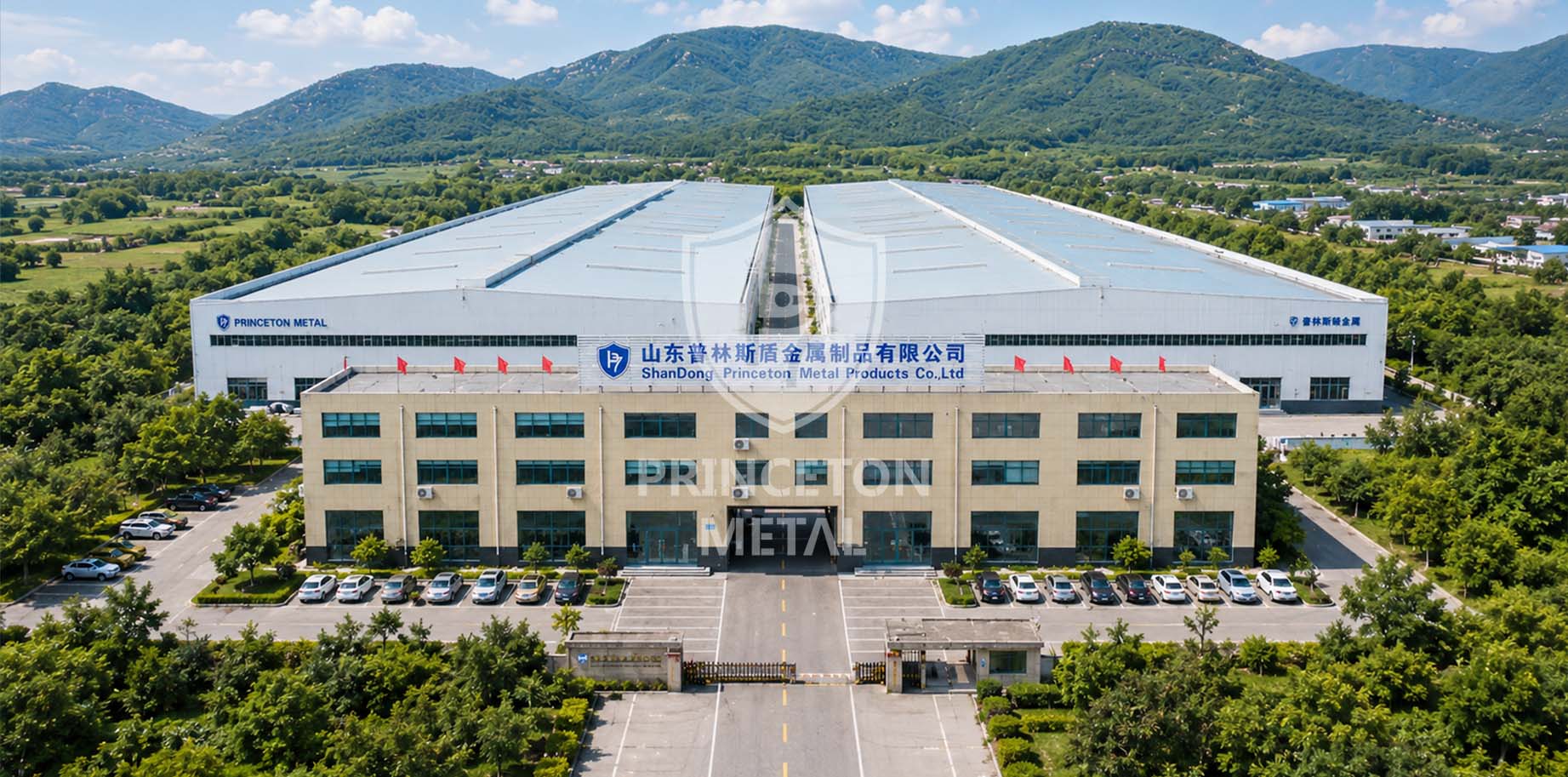
Princeton Metal Factory Panorama
Whether you are sourcing standard products or developing components to suit project drawings, we can discuss your requirements for dimensions, coating specifications, colour references, inspection records, packaging and delivery coordination before production begins.
Planning an Aluminium Project?
Send us your drawings, product specifications or project requirements to discuss a suitable manufacturing solution.
Tel: 0086-17616763451
WhatsApp: +86-17616763451
Email: sales@princetonmetal.com
Factory Address: NO.2788, Nanhuan Road, Linqu County, Weifang City, Shandong Province, China, 262600