Is aluminum fencing more expensive than vinyl
 Aug 07, 2025|
 View:1110
When homeowners and contractors evaluate fencing materials, cost remains a decisive factor. Among the options, aluminum and vinyl fencing stand out for their durability, low maintenance, and aesthetic appeal. However, the question of whether aluminum fencing is more expensive than vinyl depends on multiple variables, including material quality, design complexity, and regional market dynamics. This article dissects the cost drivers of both materials to provide a nuanced comparison.
Cost Breakdown: Material and Installation
Aluminum Fencing: Premium Pricing with Long-Term Value
Aluminum fencing typically commands a higher upfront cost than vinyl. In New Zealand, for instance, aluminum fencing averages 160–320 per linear meter, while vinyl ranges from 140–280 per meter. Similar pricing trends are observed in global markets: Chinese suppliers offer ornamental aluminum panels at 14–20 USD per piece for bulk orders, translating to approximately 40–60 per linear meter for standard 1.8m panels. Custom designs, such as laser-cut patterns or powder-coated finishes, further escalate costs, with premium aluminum fencing exceeding $400 per meter in bespoke projects.
The price disparity stems from aluminum’s inherent advantages. Its lightweight yet robust structure resists corrosion, making it ideal for coastal areas or humid climates. Additionally, aluminum’s malleability allows for intricate designs, such as spear-topped panels or curved pickets, which are often priced at a premium. Labor costs for aluminum installation are comparable to vinyl, averaging 100–150 per hour, but site preparation (e.g., leveling sloped terrain) may add 20–30% to the total expense.
Vinyl Fencing: Affordable Durability with Limited Customization
Vinyl fencing is positioned as a cost-effective alternative, with prices starting at 140permeterinNewZealandandbulkordersfromChinesemanufacturersdroppingto18–$24 USD per meter for large-scale projects. Its affordability arises from standardized production processes and limited material variability—most vinyl fences use rigid PVC profiles in white, tan, or grey. While vinyl panels are available in lattice or privacy styles, customization options (e.g., wood-grain textures or decorative post caps) are less prevalent than aluminum.
Installation costs for vinyl are marginally lower due to its modular design, which reduces labor time. However, vinyl’s susceptibility to impact damage and UV degradation over time may necessitate early replacements, offsetting initial savings. For example, a vinyl fence in a high-wind area might require reinforced posts or deeper footings, increasing installation complexity and costs.
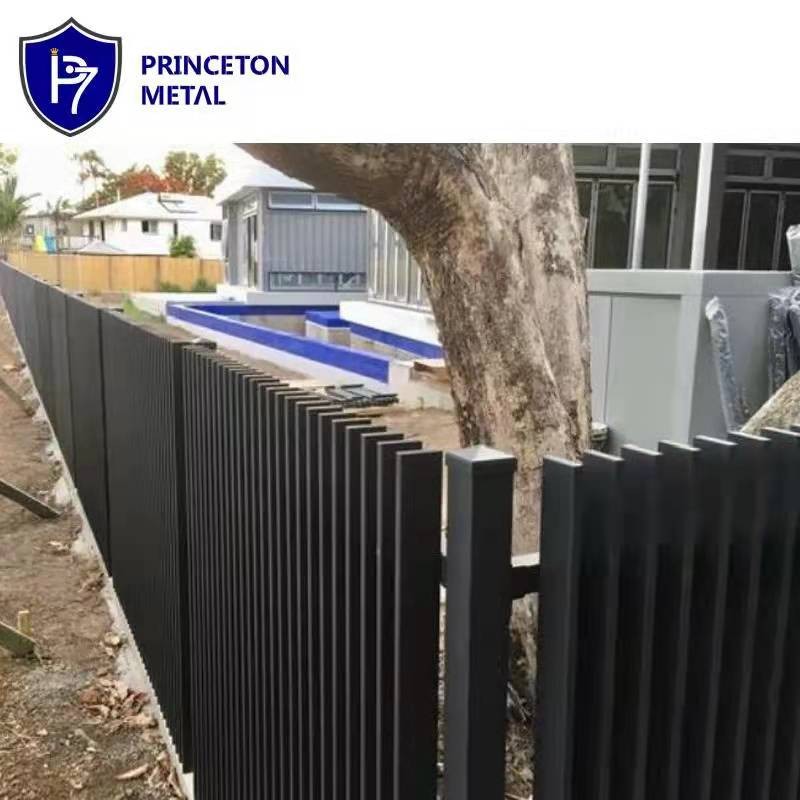
Key Cost Influencers
1.Material Quality:
High-grade aluminum alloys (e.g., 6063-T5) with powder-coated finishes cost 30–50% more than basic models. Similarly, vinyl fences using UV-stabilized PVC and impact modifiers are priced 15–20% higher than standard grades.
2.Design Complexity:
Aluminum’s versatility allows for ornate designs, such as wrought-iron replicas or automated gates, which can double the per-meter cost. Vinyl’s design limitations restrict it to simpler profiles, though innovations like co-extruded layers (combining rigid and flexible PVC) are narrowing the gap.
3.Geographic Factors:
In regions prone to extreme weather (e.g., hurricanes or heavy snowfall), aluminum’s durability justifies its premium. Conversely, in dry climates with minimal temperature fluctuations, vinyl’s lower cost may prevail.
Long-Term Cost Analysis
While aluminum fencing has a higher initial price, its 20-year warranty and resistance to fading, cracking, or warping reduce lifecycle costs. Vinyl fences typically carry 30-year warranties but may require repairs or replacements sooner if exposed to prolonged sunlight or physical stress. For example, a 2015 study by the Fencing Industry Association found that aluminum fences incurred 40% fewer maintenance expenses than vinyl over a 15-year period.
Conclusion: Aluminum Fencing’s Cost-Benefit Balance
Aluminum fencing is generally more expensive than vinyl upfront, with prices influenced by material grade, design intricacy, and regional demand. However, its superior durability, corrosion resistance, and aesthetic flexibility justify the premium for many homeowners. While vinyl offers a budget-friendly entry point, aluminum fencing’s long-term value—coupled with its adaptability to diverse architectural styles—positions it as a preferred choice for projects prioritizing longevity and visual appeal. Ultimately, the decision hinges on balancing immediate costs with future performance, where aluminum fencing often emerges as the prudent investment.