

Chromate vs. Chrome-Free Aluminium Pretreatment: What You Need to Know in 2026
HomeCompany NewsChromate vs. Chrome-Free Aluminium Pretreatment: What You Need to Know in 2026
Chromate vs. Chrome-Free Aluminium Pretreatment: What You Need to Know in 2026
 Sep 18, 2026|View:26

Chromate vs. Chrome-Free Aluminium Pretreatment: What You Need to Know in 2026


When buyers source powder-coated aluminium, the conversation usually starts with alloy, colour and coating brand. Aluminium pretreatment is often overlooked — until a project fails a salt spray test, a coating loses adhesion, or a customer audit requires chemical and process documentation.


1.What Is Aluminium Pretreatment — and Why It Decides Coating Performance


Aluminium extrusions do not arrive at the powder booth ready for aluminum pretreatment or powder coating.


It carries a natural oxide layer, plus residue from extrusion, cutting, handling and storage.

Pretreatment removes that residue and creates a controlled conversion layer on the surface. That layer is not a decorative finish. It is the bridge between the aluminium substrate and the powder coating.


A typical line runs:

Degrease → Etch → Rinse → Conversion Coating → Dry → Powder Coat → Cure
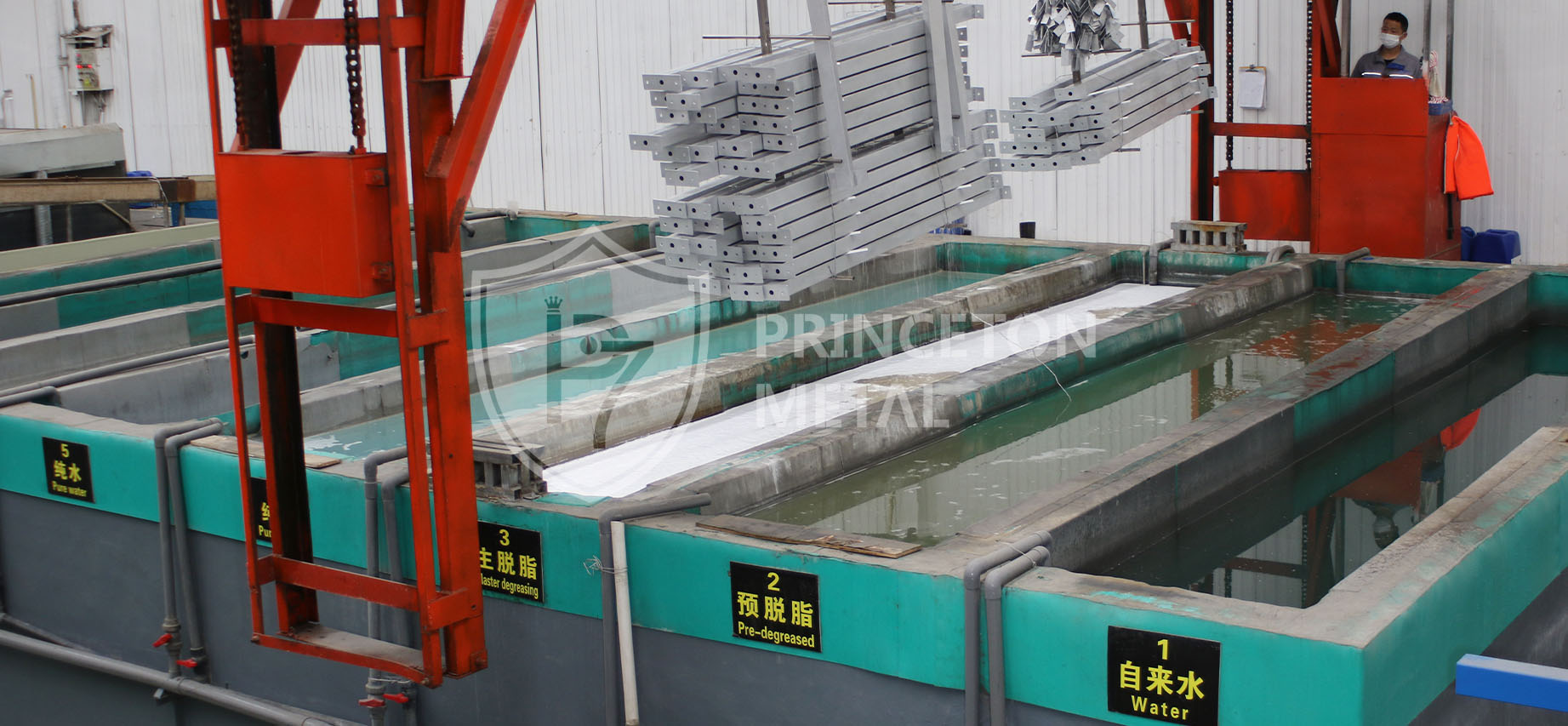

1.jpg

Princeton Metal's horizontal pretreatment line — from pre-degreasing and main degreasing to multi-stage pure water rinsing.


If the conversion step is wrong, the powder may still look fine on delivery. The problem shows up later — as blistering, filiform corrosion or adhesion loss after weathering, and usually as a salt spray or adhesion result that has to be defended on site.


Key takeaway: Pretreatment is invisible in the finished product, but it determines whether the coating system survives its warranty period.


2. What Is Chromate Pretreatment?


Chromate conversion coating is the traditional way to prepare aluminium before powder coating. It has been used for decades because it improves adhesion and provides corrosion inhibition.

But“chromate” is not one single chemistry. Chromium can be present as trivalent chromium, Cr(III), or hexavalent chromium, Cr(VI). The two forms behave differently, and they carry very different regulatory profiles.


Cr(VI) is the form that has drawn the most attention.The U.S. EPA's 2024 toxicological review of hexavalent chromium addresses serious health effects associated with exposure. In Europe, Cr(VI) substances sit within REACH authorisation and restriction frameworks.


For buyers, this means one question is no longer enough. Asking “Is it chromate?” does not tell you which chromium chemistry is in the tank.


Key takeaway: Buyers should ask suppliers to specify the chromium form, not just confirm that a chromium-based process is used.
3. What Is Chrome-Free Pretreatment?


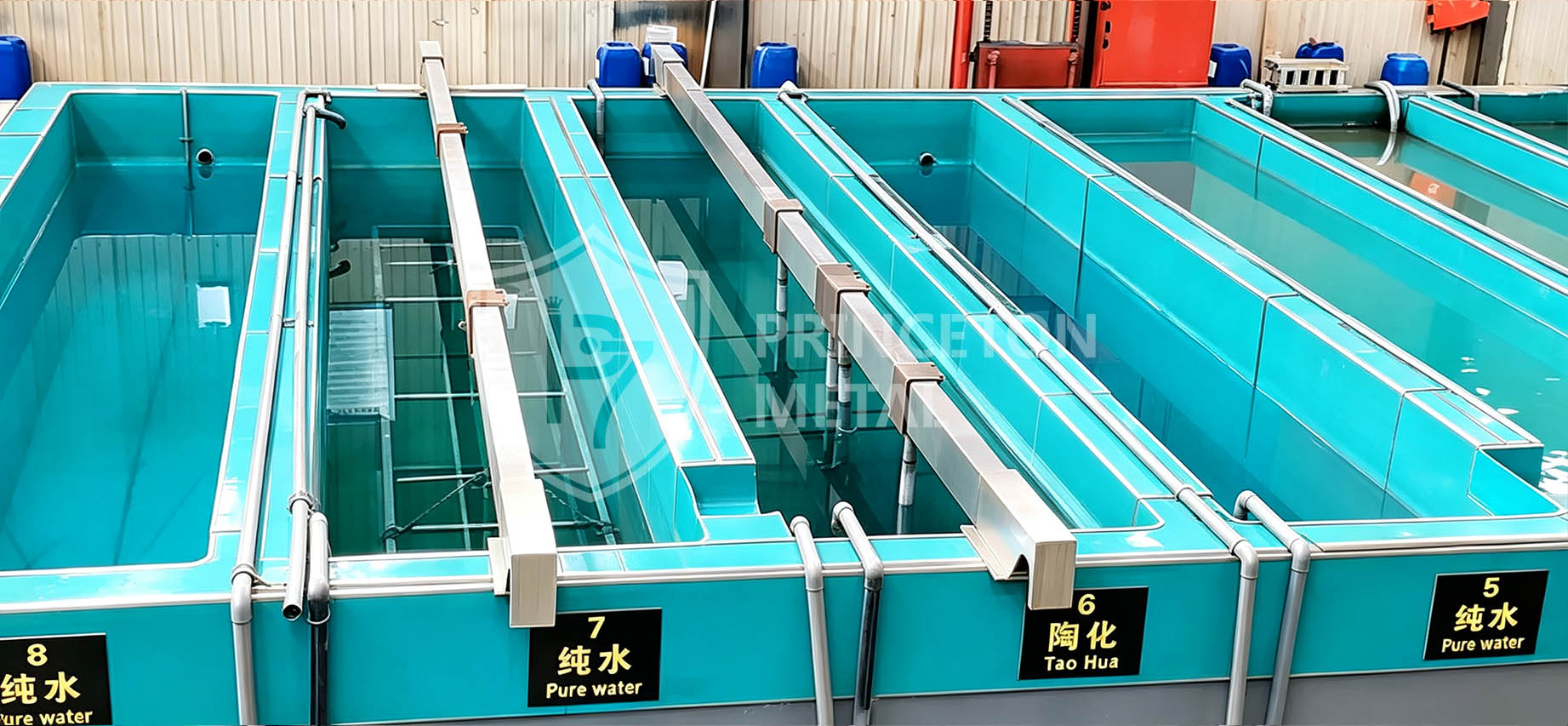
5.jpg

Chrome-free conversion (ceramic conversion) bath on Princeton Metal's pretreatment line.


Chrome-free pretreatment replaces chromium-based conversion chemistry with alternatives such as zirconium-titanium or silane systems.


It is not a shortcut. The aluminium still goes through cleaning, etching, rinsing, conversion and drying. What changes is the chemistry that forms the conversion layer.


QUALICOAT maintains a category of approved alternative pretreatment systems. These systems must pass testing before they can be used in QUALICOAT-approved finishing lines.

At Princeton Metal, the aluminium pretreatment process uses a chrome-free conversion coating system — ceramic conversion, referred to internally as chrome-free passivation. The treatment does not rely on chromium-based conversion chemistry.


Key takeaway: Chrome-free is a chemistry change, not a process skip. Buyers should look for approval and test data, not just the label.


4.Chromate vs. Chrome-Free: A Side-by-Side Comparison


Factor


Chromate-Based Pretreatment

Chrome-Free Pretreatment
Chemistry

Chromium-based conversion coating

Non-chromium conversion coating (Zr/Ti, silane, etc.)

Corrosion protection

Provides corrosion inhibition through the conversion layer

Provides corrosion protection through alternative conversion chemistr

Regulatory exposure

Depends on chromium form; Cr(VI) faces REACH/RoHS/EPA pressure

Avoids chromium-based conversion chemistry

Workplace & wastewater

Requires chromium handling and controls

Eliminates chromium from conversion chemistry; still requires chemical management

Qualification

System-specific

System-specific; can be approved under QUALICOAT/GSB programme


There is no universal winner. There is no single pretreatment system that automatically fits every aluminium application.


A chrome-free system still needs to be properly controlled, while a chromate system may remain relevant for specifications that explicitly require it.


The real question is: which pretreatment and coating system fits this specific aluminium product, environment and specification?


5. Why 2026 Is a Turning Point — and What Changes Before 31 December


Three regulatory developments — and one standards update — are making pretreatment a live procurement issue.


EU REACH. The Commission's 2026 authorisation decisions list shows chromium-related authorisations being granted and renewed with review periods running into the 2030s, while other applications — including certain lead chromate compounds and chromium trioxide uses — were refused or annulled. The direction is clear even where individual decisions differ: Cr(VI) uses now sit under case-by-case authorisation, with each review period acting as a deadline.


EU RoHS.RoHS exemption 9(a)-III permits up to 0.7% hexavalent chromium by weight, used as an anticorrosion agent in the working fluid of the carbon steel sealed circuit of gas absorption heat pumps. It applies to category 1 equipment and expires on 31 December 2026. It does not regulate aluminium pretreatment or powder coating. It matters here for a different reason: it shows how narrowly the remaining Cr(VI) exemptions are now drawn, and how quickly they can lapse. Buyers who read "RoHS" and "chromium" in the same sentence should check the actual exemption scope before applying it to a coating specification.


United States.The EPA's IRIS Toxicological Review of Hexavalent Chromium (final, August 2024) continues to inform regulatory and customer scrutiny. California Proposition 65 adds its own warning requirements.


Industry standards. In May 2026, FGIA published AAMA 2603-26, AAMA 2604-26 and AAMA 2605-26, replacing the 2022 editions. The update provides additional guidance on pretreatment conversion coatings — evidence that pretreatment is moving from an unlisted factory detail to a specified requirement. Where a project is specified against AAMA 2605, the edition matters: 2605-26 is the current revision, and it is the "superior performing" specification rather than the "high performance" one, which is AAMA 2604.


Green claims. Directive (EU) 2024/825, which applies from 27 September 2026, restricts unsubstantiated and generic environmental claims in communications with consumers. The separate Green Claims Directive proposal remains pending, but the direction is already settled in practice: "green", "eco-friendly" and "climate neutral" have to be backed by evidence. That is why the pretreatment and wastewater claims in Section 8 are written as specific, documentable statements rather than adjectives.


For aluminium suppliers serving Europe and North America, pretreatment chemistry is no longer a factory detail. It is part of the compliance file.


Key takeaway: Regulatory timelines are moving. Buyers should verify pretreatment chemistry before specifying or approving a supplier.

6.Can Chrome-Free Conversion Match Chromate Performance?


The key issue is not simply whether a pretreatment system is chrome-free. The chemistry, process control, coating system and application environment all influence the final result.


Our horizontal pretreatment line runs through multiple stages: pre-degreasing, main degreasing, pure water rinses, chrome-free passivation/ceramic conversion, and final pure water rinses.The conversion stage uses advanced chrome-free chemistry from BONDERITE, a global surface-treatment supplier, formulated to match traditional chromate conversion coatings in corrosion protection and adhesion. The technical datasheet is available on request.


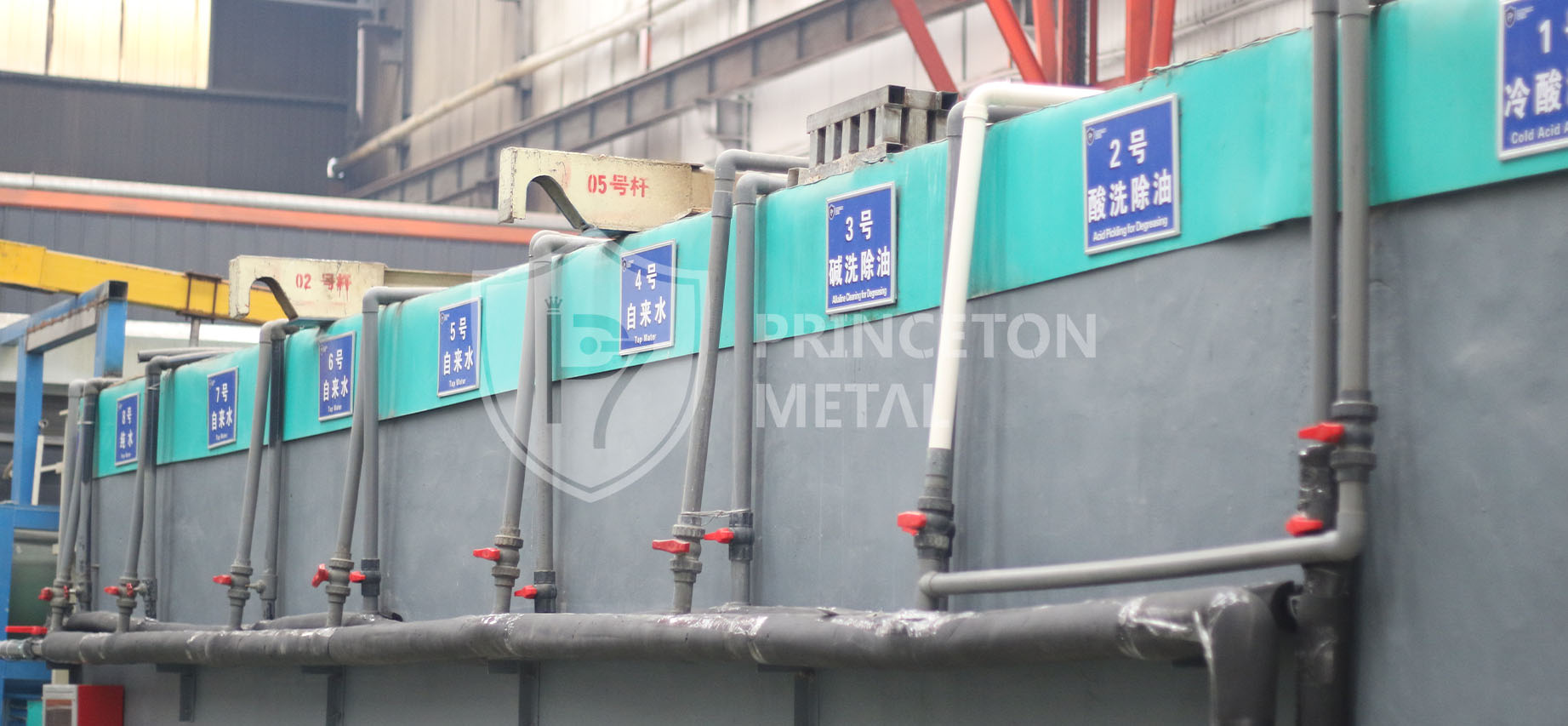
2.jpg

Close-up of the rinsing section — acid degreasing, alkaline degreasing and multiple pure water rinses.


We control the chemistry tightly. The pure water rinse stages ensure surface cleanliness before conversion. The chrome-free passivation bath operates within strict pH and temperature parameters, with treatment time controlled to the second. Parameters are tested multiple times per shift.


This control delivers the results that buyers need. The purpose is straightforward: maintain a consistent and clean aluminium surface before powder coating.


Before confirming an order, buyers should ask three questions: What conversion chemistry is used? Is it chromium-based or chrome-free? How is the pretreatment line controlled and how is its wastewater managed? Princeton Metal's chrome-free conversion line, multi-stage pure water rinsing and dedicated wastewater treatment equipment are our answers — and the documents behind them are available on request. See our compliance reportsfor the test and material documentation we supply with project orders.


Key takeaway: Chrome-free conversion is not a downgrade.With tight process control — multi-stage pure water rinsing, BONDERITE chrome-free conversion and strict parameter testing — it delivers the corrosion protection, adhesion and environmental profile that exterior aluminium projects require.


7. What This Means for Architectural Aluminium


3.jpg

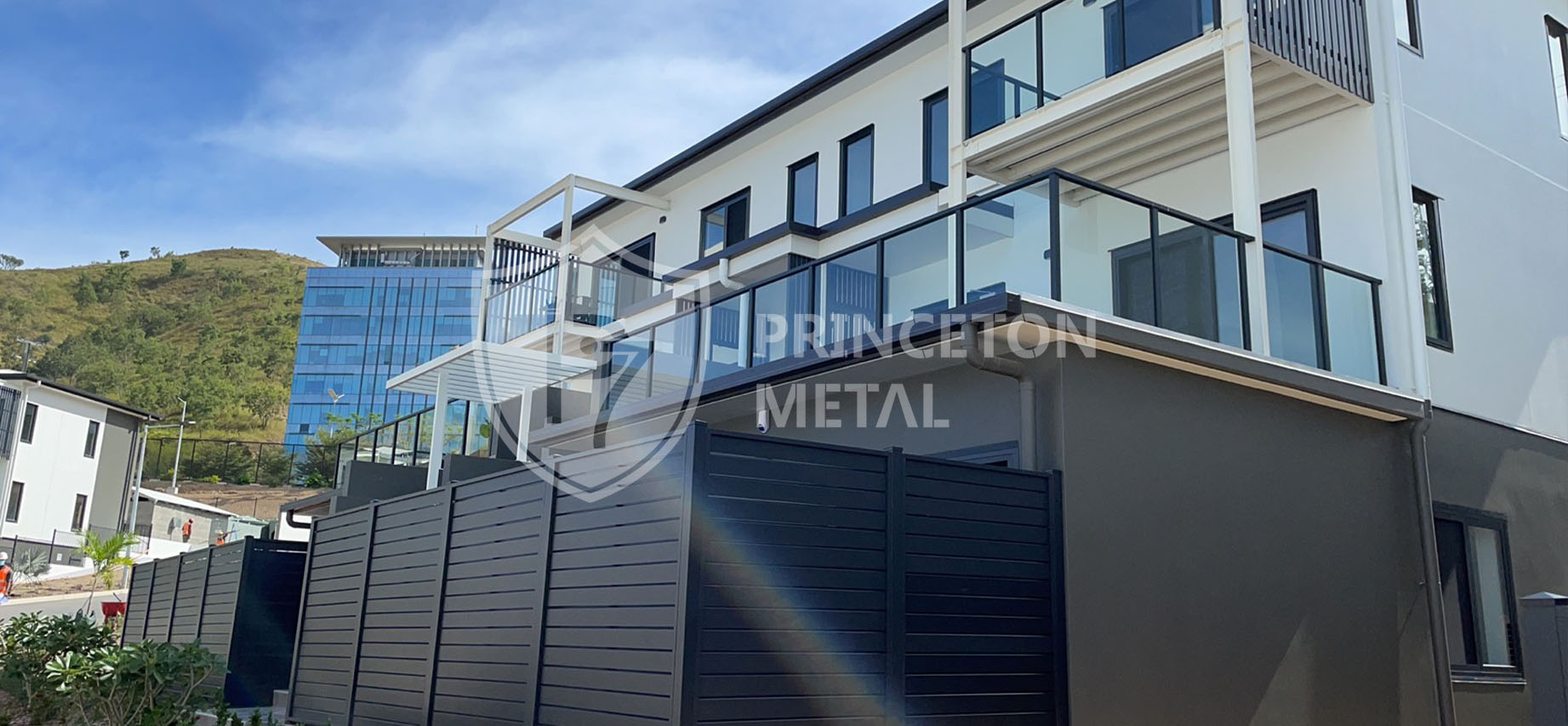
Powder-coated aluminium privacy screens and balustrades by Princeton Metal, installed in a modern exterior architectural project.


For aluminium fences, gates, privacy screens, balustrades and façade panels, aluminium pretreatment disappears under the powder coating. The finished product is not simply aluminium plus colour. It is: substrate → pretreatment → powder coating → cured finish → installed product, and every step in that chain affects how the product behaves after installation.


That chain is what an approval process is really testing. A supplier who can explain it — which conversion chemistry, how the line is controlled, what the coating system is specified against, and which documents back each claim — is easier to audit, easier to approve and easier to hold accountable on site. It is also why we publish project references alongside the chemistry: systems specified this way are installed on exposed sites such as The Beachfront Buddina and Rockpool Rainbow Bay in Queensland, where salt exposure is a design condition rather than a detail.


Powder-coated aluminium systems for these applications are configured per project — see privacy screens, balustradesand gates.


8. How Princeton Metal Puts Green Manufacturing into Practice


4.jpg

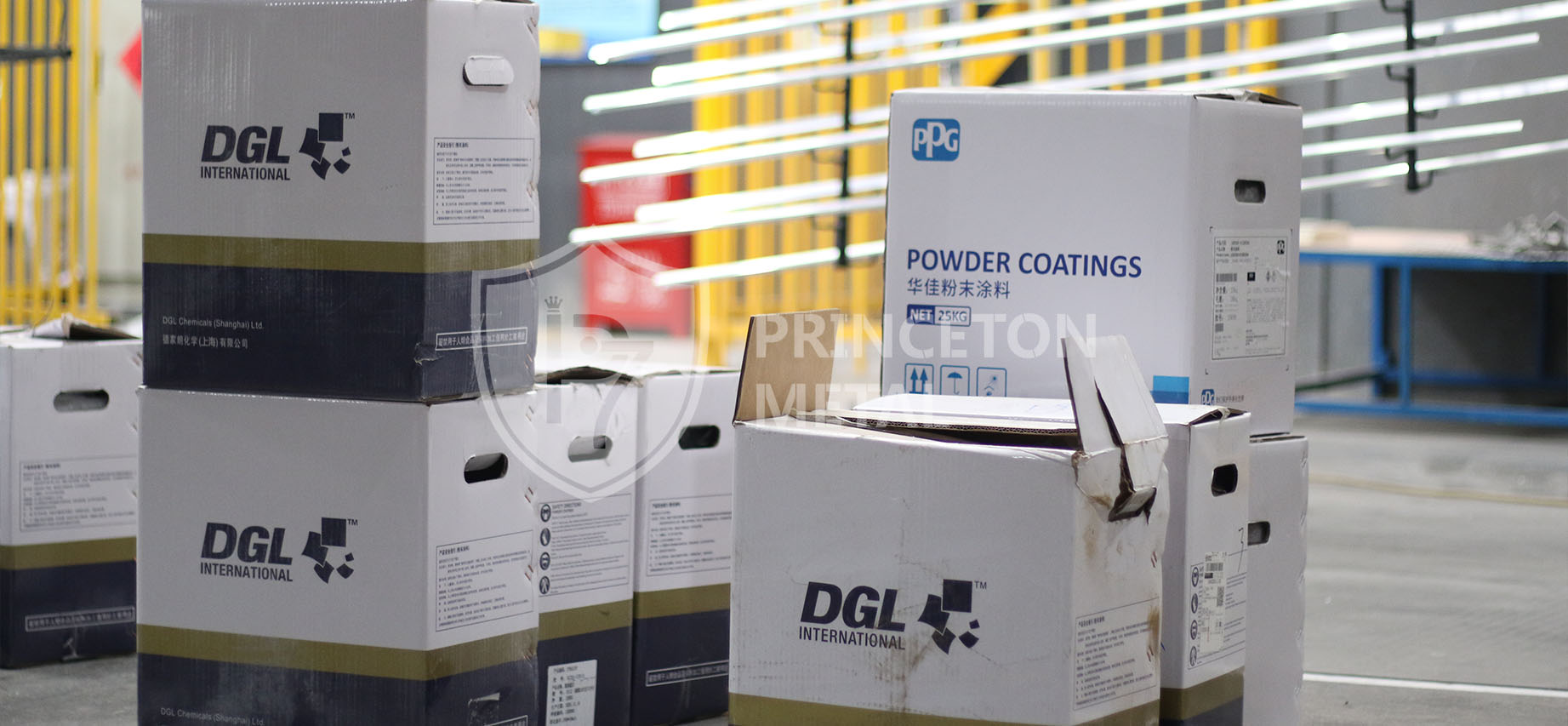
Powder coating materials — PPG and DGL powder coatings used in Princeton Metal's production line.


Green manufacturing is easy to print on a brochure and harder to prove on a production line. At Princeton Metal it comes down to three things holding at the same time: keep chromium out of the conversion step, manage the process water the line produces, and document both well enough that a buyer can audit them.


Our horizontal aluminium pretreatment line runs pre-degreasing, main degreasing, pure water rinses, chrome-free passivation and final pure water rinses before drying and powder coating. The conversion stage uses advanced chrome-free chemistry from BONDERITE, a global surface-treatment supplier, in place of chromium-based conversion chemistry; the datasheet is available on request. We state that boundary precisely: the pretreatment step of our coating system does not rely on chromium-based conversion chemistry, and we do not extend that claim to alloy composition, packaging or consumables elsewhere in the plant.


Every chemical stage is followed by rinsing, and the final stages use pure water. Rinsing is usually described as a quality measure, and it is one — but it is also where chemical consumption is decided: chemistry left on the part travels into the next bath, and contamination left on the part travels into the rinse water downstream. Multi-stage rinsing with pure water limits both. The conversion bath sits within strict pH and temperature parameters, with treatment time controlled to the second and parameters tested multiple times per shift, so the conversion layer is the same on the first panel of a run as on the last — and fewer parts are re-coated or scrapped.


Aluminium pretreatment is an industrial chemical process, and an honest description of it has to include what happens to the water. Princeton Metal operates dedicated wastewater treatment equipment for the process water coming off the pretreatment line, so it is treated before discharge rather than sent straight to drain. We would rather be asked about it than not: is there dedicated treatment or is the water mixed and sent to drain, what is monitored and how often, who holds the discharge permit, and what happens to the sludge and spent baths. We will walk a customer or their third-party inspector through the line and the treatment stage during a factory audit.


Powder coating is a dry, solvent-free process: there is no solvent carrier to evaporate in the booth, so none of the solvent-borne VOC emissions that characterise liquid paint lines, and overspray is collected as recoverable powder rather than solvent-laden waste. Curing ovens remain emission points and are managed as such. We also do not publish "zero discharge", "carbon neutral" or "eco-friendly" as standalone claims — where there is a number behind a statement, we would rather send the document than the adjective.


For project-based orders, surface treatment and powder coating requirements are reviewed against the product, the application environment and your specification. Send us your drawings or technical requirements and we will come back with a manufacturing and finishing solution, including the pretreatment and coating documentation your approval process needs.


Get a reply within 24 hours →


Tel: 0086-17616763451
WhatsApp: +86-17616763451
Email: sales@princetonmetal.com
Factory Address: NO.2788, Nanhuan Road, Linqu County, Weifang City, Shandong Province, China, 262600


Sources:

European Commission — REACH authorisation decisions list (Article 64(8) of Regulation (EC) No 1907/2006)

https://eur-lex.europa.eu/legal-content/EN/TXT/PDF/?uri=OJ:C_202690027

Directive 2011/65/EU (RoHS), Annex III entry 9(a)-III, as inserted by Commission Delegated Directive (EU) 2023/171 — expires 31 December 2026

https://eur-lex.europa.eu/legal-content/EN/TXT/PDF/?uri=CELEX:32023L0171

QUALICOAT — approval of alternative pretreatment systems (QUALICOAT Specifications, Appendix A6)

https://www.qualicoat.net/main/about-us/assured-quality/information-for-manufacturers.html

U.S. EPA — IRIS Toxicological Review of Hexavalent Chromium (Cr(VI)), final, August 2024

https://iris.epa.gov/document/&deid=353296

FGIA — AAMA 2603-26 / 2604-26 / 2605-26 update, May 2026

https://fgiaonline.org/about/news-and-blogs/fgia-updates-suite-of-finishes-documents-for-aluminum-extrusions-panels/(AAMA 2605-26: https://store.fgiaonline.org/aama-2605-26)

European Commission — Green claims

https://environment.ec.europa.eu/topics/circular-economy-topics/green-claims_en


WHAT ARE YOU LOOKING FOR?
*
This field is required
Total quantity you need
*
This field is required
*
This field is required
Email format error
Due to email instability, you might miss our correspondence. Please provide your phone number for alternative contact.
This field is required
Telephone information is wrong!
Send Message
鲁ICP备19040767号-3