


 Sep 15, 2026
 View:30
NCC 2025 Australia: Key Changes for Aluminium Fence, Screens & Balustrades
NCC 2025 is changing how structural compliance is assessed across Australia. For projects involving aluminium fencing, privacy screens and balustrades, the changes are particularly relevant when wind loads, structural verification and Performance Solutions are involved.
With different states and territories adopting NCC 2025 on different timelines, Australian builders, contractors, distributors and project buyers need to understand what has changed — and what these changes mean for aluminium products and supplier documentation.
This article explains the key NCC 2025 changes, their impact on aluminium fence, screen and balustrade projects, and what buyers should check before selecting a supplier.
1. What Are the Key Changes in NCC 2025?
NCC 2025 introduced two key tightenings for structural reliability Performance Solutions:
Expert judgement removed.A2G2 subclause 5 now requires a Performance Solution to be at least equivalent to DTS provisions. For aluminium, the B1V1 Verification Method must be applied. One-year transition from each state’s adoption date.
Quantified reliability indices mandatory.Tables B1P1a set minimum indices: β = 3.45 for Importance Level 1, β = 3.70 for Importance Level 2. Suppliers must quantify probability of failure — “we’ve sold this for 20 years” is no longer sufficient.
For aluminium fence, screen and balustrade suppliers: if a project uses a Performance Solution, quantified structural verification data is required. Expert opinion alone is no longer acceptable.
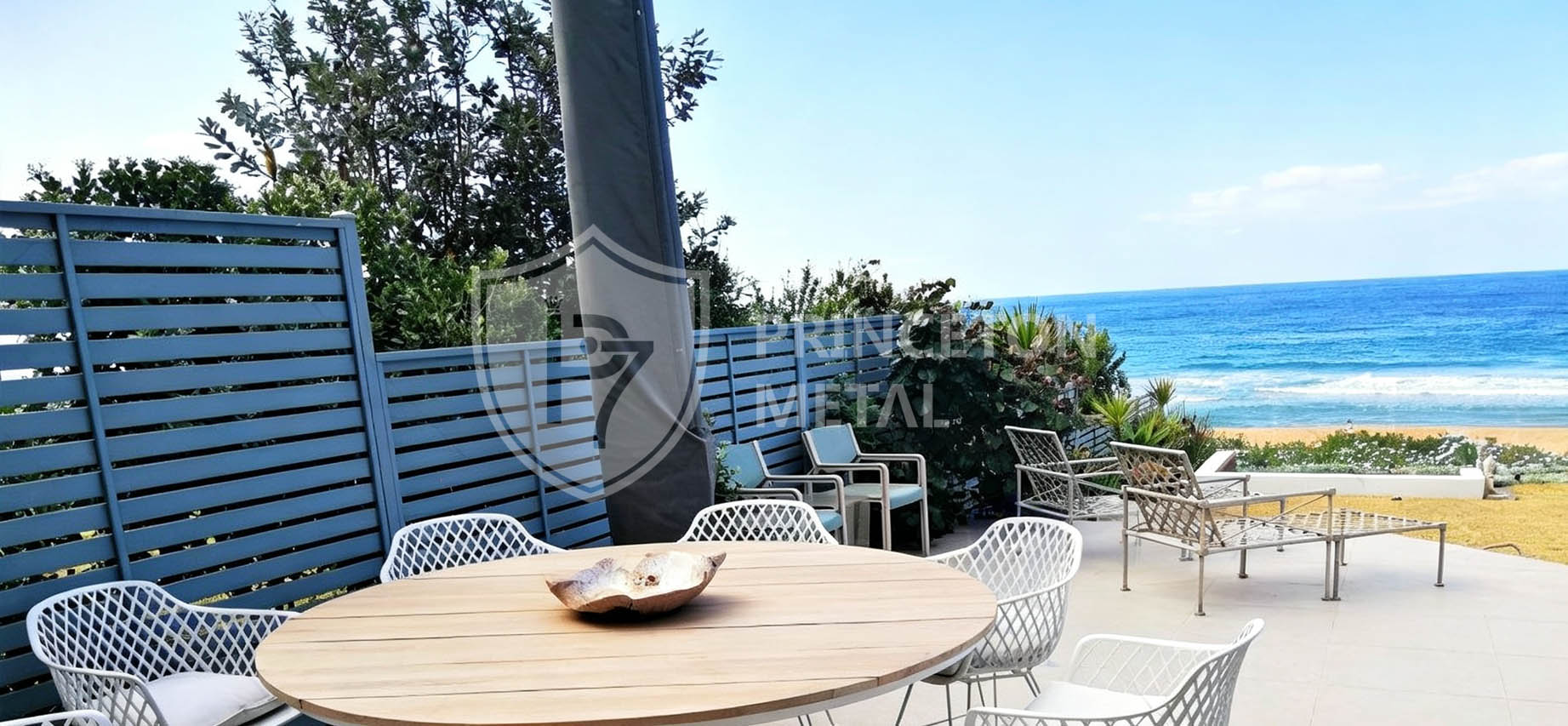
NCC 2025 also references AS/NZS 1170.2:2021 (Amendments 1:2023 and 2:2024) and integrates AS 1926.1:2024. Two changes directly affect outdoor aluminium structures:
Wind region boundary shifts.Region B is split into B1 and B2. B2 covers tropical cyclone-prone areas including the Gold Coast, Brisbane and Sunshine Coast. The Queensland 50–100 km coastal band is now cyclonic Region B2. Aluminium fence and screen systems must meet cyclonic wind load requirements.
Pool barrier standard update.AS 1926.1:2024 includes clearer definitions, updated gate latch and hinge requirements, a re-introduced 1,400mm minimum latch-release height, and enhanced gate component testing.
Key takeaway: Wind region changes are not just technical — they directly change material cost and compliance risk. Quoting a standard N2 product for a newly classified B2 cyclonic site is transferring risk to the buyer.
2. What Does NCC 2025 Mean for Aluminium Fence, Screens & Balustrades?
How NCC 2025 Changes Aluminium Supplier Requirements.NCC 2025 does not require every panel to be individually certified, but it does require Performance Solutions to be supported by quantified verification and DTS-compliant components to be traceable to documented standards. This creates a clear dividing line:
| Supplier Type | Can Support NCC 2025 Projects | Risk to Buyer |
Catalogue-only, no engineering | No — cannot produce structural verification or wind load calculation | Approval delays, redesign costs |
| Basic engineering support | Partial — standard DTS only, not Performance Solutions | Limited to simplest projects |
Integrated, in-house engineering | Yes — AS/NZS 1170.2 calculations, structural verification, Performance Solution documentation | Full project coverage |
For Australian distributors and contractors, the question is no longer simply “can you supply the product?” It is: can you supply the product with the engineering documentation that NCC 2025 requires?
Wind load cost impact.The wind region changes mean a project previously classified as non-cyclonic in Queensland’s 50–100 km coastal band now requires cyclonic-rated posts, closer spacing and deeper footings.
| Wind Classification | Example Design Gust Speed | Typical Project Impact |
N2 (suburban) | 40 m/ | Lower structural demand |
N3 (open terrain) | 46 m/s | Increased structural requirement |
N4 (exposed coastal) | 52 m/s | Higher section and connection requirements |
C2 (cyclonic) | 61 m/s | Cyclonic design requirements |
Post sizes, spacing, footing dimensions and connection details should be determined by project-specific structural design. They should not be selected solely from the wind classification.
Pool fencing and import dependency.AS 1926.1:2024 remains the DTS solution for pool barriers. Suppliers must now document complete systems — panels, posts, gates, hinges, latches — not individual components.
Australia’s aluminium extrusion imports grew 21.06% (2023–2024), CAGR 22.02% (2020–2024). Domestic supply cannot meet demand. NCC 2025 adds new supplier criteria. Imported aluminium products must now be accompanied by:
(1)AS/NZS 1170.2 wind load calculations for the project’s specific wind classification
(2)Structural verification documentation aligned with NCC 2025 Performance Solution requirements
(3)AS 1926.1:2024 compliance documentation for pool fencing systems
(4)Material traceability records (Mill Test Certificates, alloy composition, mechanical properties)
Key takeaway:Rising import dependency plus higher compliance thresholds means suppliers who can deliver complete engineering documentation will take share from those who cannot.
4. How Australian Buyers Can Prepare for NCC 2025
Across the Australian aluminium supply chain, leading distributors and contractors are consolidating around three strategies:
Consolidating to a Single Engineering-Capable Supplier
Rather than sourcing fencing, screens and balustrades from three separate factories and attempting to coordinate three sets of engineering documents, buyers are moving toward integrated suppliers who can provide one verified structural system across multiple product categories.
This means: one wind load calculation for the project, one structural verification document, one material traceability package, and one point of accountability.
Requiring Compliance Documentation at the Quoting Stage
Under NCC 2025, a supplier who cannot provide compliance documentation before the order is placed is unlikely to provide it after. Buyers are now requesting wind load calculations, MTCs and AS 1926.1 documentation as part of the tender or quoting process — not as an afterthought.
Locking In Supply Partnerships Before the 2027–2028 Adoption Wave
With NSW and Queensland deferring NCC 2025 to May 2027, there is a procurement window through 2026–2027. Buyers who establish supplier relationships with engineering-capable partners now will have a compliance and cost advantage when the stricter regime takes effect across all jurisdictions.
Key takeaway:2026–2027 is the window to lock in engineering-capable suppliers. By the time NSW and Queensland mandate NCC 2025 in 2027, capacity at qualified suppliers will be pre-committed.
5. How to Choose an Aluminium Supplier for NCC 2025 Projects
For distributors, contractors and project buyers evaluating their aluminium supply chain against NCC 2025, the following qualification pathway applies:
Step 1: Wind classification review.Confirm the project’s wind classification under AS/NZS 1170.2:2021 (N2, N3, N4, C2, B2). Identify any projects in the Queensland 50–100 km coastal band affected by the new B2 cyclonic classification.
Step 2: Compliance documentation request.Request the supplier’s AS/NZS 1170.2 structural calculations, MTCs, and AS 1926.1:2024 documentation for pool fence systems. If the supplier cannot provide these before order, they will not provide them after.
Step 3: Performance Solution capability check.If the project uses a Performance Solution under NCC 2025, confirm the supplier can provide the quantified verification data required under the new B1V1 Verification Method. Expert judgement alone is no longer acceptable.
Step 4: Trial container with full documentation.For first orders from a new supplier, request a trial container accompanied by complete compliance documentation for the specific profiles and systems supplied — not a generic product certificate.
Step 5: Framework agreement with compliance obligations.Lock in a supply agreement that includes compliance documentation obligations for each shipment, with quarterly price reviews tied to LME aluminium and billet premium.
6. Princeton Metal: Aluminium Outdoor Systems for Australian Projects
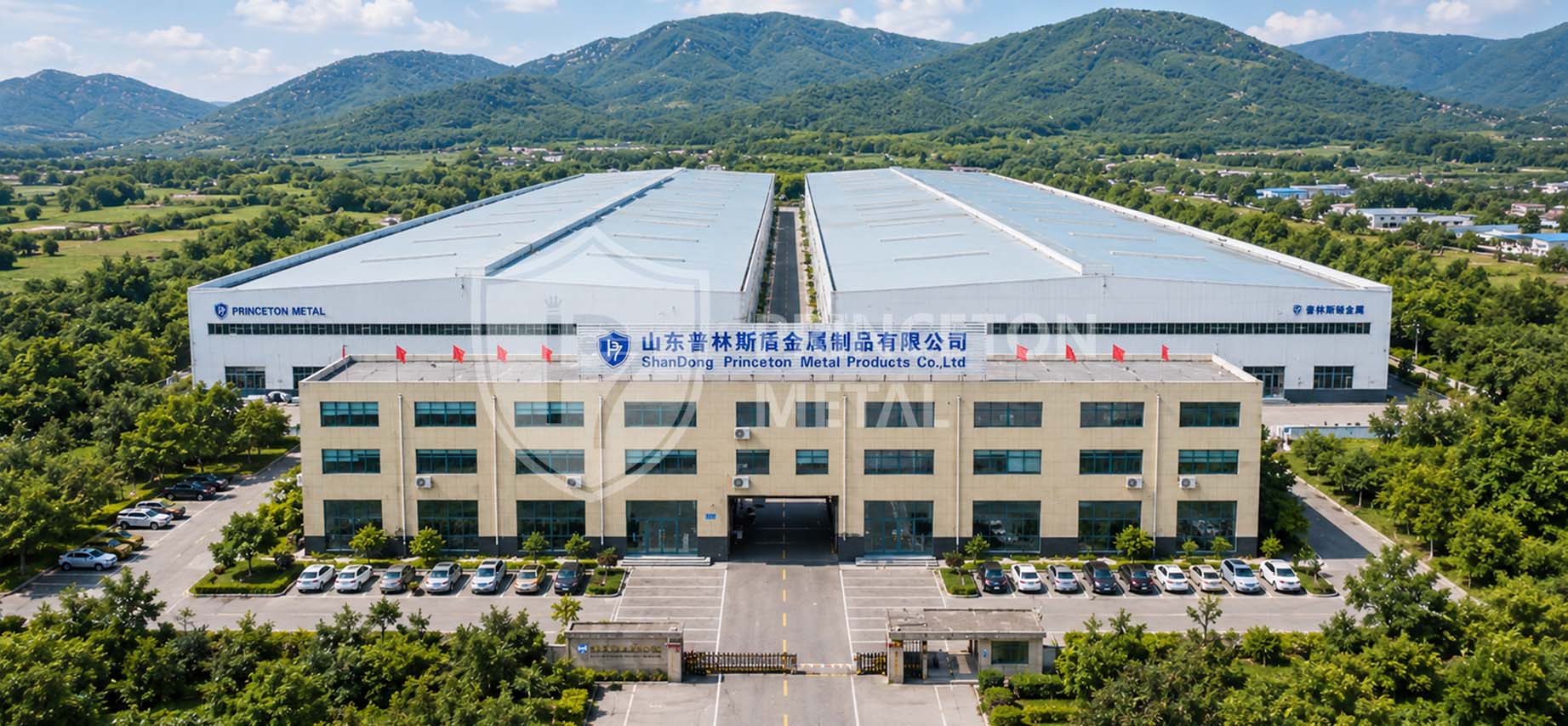
Princeton Metal supplies aluminium fencing, gates, privacy screens and balustrades to Australian distributors, contractors and project buyers.
Environmental classification & warranty
Products are classified against a six-tier corrosion scale — C1 (dry indoor) through C3 (coastal), C4 (severe coastal), C5 (surf coast) to CX (offshore). Finish warranty follows AAMA standards:
(1)AAMA 2605:25-year film integrity, 20-year colour retention
(2)AAMA 2604:20-year film integrity, 15-year colour retention
(3)AAMA 2603:15-year film integrity, 10-year colour retention
Maintenance schedule is a warranty condition: C1–C3 every 12 months, C4 every 6 months, C5 every 3 months, CX project-specific.
All finishes tested to AS4312 / ISO 9223 and AS/NZS 1580, AS 3715, ASTM 2224, ISO 2409, AS 233.33.2.
Tel:0086-17616763451
WhatsApp: +86-17616763451
Email: sales@princetonmetal.com
Factory Address: NO.2788, Nanhuan Road, Linqu County, Weifang City, Shandong Province, China, 262600
Sources:
Australian Building Codes Board (ABCB) – NCC 2025: Structural reliability and fire safety Performance Solutions changes:
Australian Building Codes Board (ABCB) – NCC 2025 Volume Two, Reliability indices:
https://www.abcb.gov.au/sites/default/files/resources/2026/NCC-2025-preview-draft-Volume-Two.pdf
Standards Australia – AS 1926.1:2024 Swimming pool safety barriers:
https://www.standards.org.au/news/safeguarding-young-swimmers-revised-swimming-pool-standard
6W Research – Australia Soft Alloy Aluminum Extrusion Market:
https://www.6wresearch.com/industry-report/australia-soft-alloy-aluminum-extrusion-market
Australian Building Codes Board (ABCB) – NCC 2025 State and Territory Adoption Information:
https://ncc.abcb.gov.au/ncc-2025/ncc-2025-state-and-territory-adoption-information